Why On-Chain Markets Are Dominating Crypto Trading in 2026
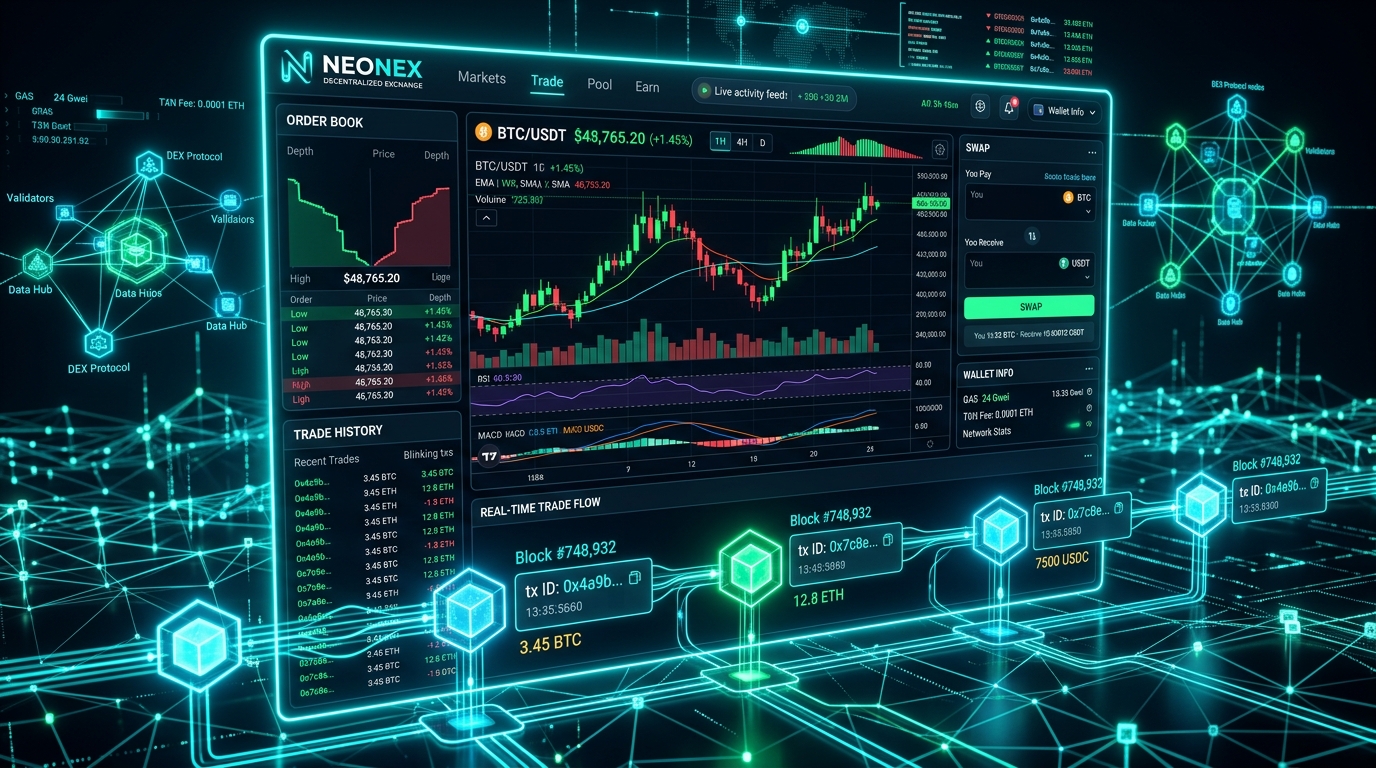
For years, centralized exchanges (CEXs) like Binance, Coinbase, and OKX were the undisputed gatekeepers of crypto trading. If you wanted to buy, sell, or trade tokens, you had no choice but to trust these platforms with your custody and security. But in 2026, we are witnessing a historic paradigm shift: on-chain markets are rapidly dominating crypto trading.
In this news analysis, we’ll look at the latest volume statistics, the technological advancements driving this shift, and why self-custody trading has officially entered the mainstream.
The Stats: DEXDecentralized Exchange - A peer-to-peer marketplace where users trade cryptocurrencies directly without custody. Volume Approaches CEX Territory
According to recent on-chain metrics compiled from DeFiLlama and Dune Analytics, the ratio of decentralized exchange (DEXDecentralized Exchange - A peer-to-peer marketplace where users trade cryptocurrencies directly without custody.) to centralized exchange (CEX) spot trading volume has reached an all-time high of 38%.
For comparison, back in 2021, DEXDecentralized Exchange - A peer-to-peer marketplace where users trade cryptocurrencies directly without custody. volume was a mere fraction of centralized alternatives (under 8%). Today, networks like Solana, Arbitrum, and Base routinely process billions in daily volume, sometimes eclipsing the spot volume of tier-1 centralized exchanges. On Solana, DEXDecentralized Exchange - A peer-to-peer marketplace where users trade cryptocurrencies directly without custody. aggregators like Jupiter have occasionally registered higher 24-hour trading volumes than Coinbase.
What is Driving the Shift to On-Chain Markets?
This transition isn't just a trend; it is driven by major structural changes in security, regulation, and technology.
1. The Cost of Centralized Trust
Every market cycle has its share of collapses. The catastrophic failure of FTX in 2022, followed by regulatory crackdowns and security breaches on platforms like BitMart, taught retail and institutional investors a harsh lesson: keeping your capital on a centralized platform is a major risk.
On-chain trading solves this. When you trade on a DEXDecentralized Exchange - A peer-to-peer marketplace where users trade cryptocurrencies directly without custody., you plug in your hardware wallet (like LedgerA hardware cryptocurrency wallet that keeps private keys offline in secure cold storage. or Phantom). The assets never leave your custody until the exact millisecond the swap is executed via a smart contract. There is no centralized operator who can freeze your account, misuse your funds, or go bankrupt.
2. The Evolution of DEXDecentralized Exchange - A peer-to-peer marketplace where users trade cryptocurrencies directly without custody. Aggregators
In the early days of DeFiDecentralized Finance - Financial protocols built on public blockchains that eliminate intermediaries like banks., trading on-chain meant poor liquidity, high slippage, and complex user interfaces.
In 2026, DEXDecentralized Exchange - A peer-to-peer marketplace where users trade cryptocurrencies directly without custody. aggregators have solved this problem. Platforms like Jupiter (on Solana) and 1inch or Jumper (on EVM chains) scan hundreds of liquidity pools simultaneously. They route your order across multiple protocols to ensure you get the absolute best price with minimal slippage—often cheaper than trading on a centralized order book.
3. The Layer-2 Revolution
High transaction fees on Ethereum previously made DEXDecentralized Exchange - A peer-to-peer marketplace where users trade cryptocurrencies directly without custody. trading impractical for retail traders. The rise of cheap, fast Layer-2 networks (such as Base and Arbitrum) and high-throughput blockchains (like Solana) has brought transaction fees down to less than a cent. Retail users can now trade micro-cap altcoins or swing-trade blue-chips without worrying about gas fees.
Regulatory Pressures Speed Up the Transition
Centralized exchanges are facing unprecedented regulatory pressure globally. From mandatory KYC verification to restrictions on leverage trading and outright bans on certain altcoins, CEXs are becoming highly restricted environments.
In contrast, decentralized protocols are permissionless. Anyone with an internet connection and a self-custody wallet can access global liquidity. While developers are building compliant front-ends to satisfy local laws, the underlying smart contracts remain accessible on the public ledger, making them highly resilient to localized regulation.
What Lies Ahead for Crypto Trading?
While centralized exchanges will likely always exist to serve as "fiat on-ramps" (allowing users to buy crypto with bank transfers and credit cards), their role as the primary venue for trading is rapidly shrinking.
We expect DEXDecentralized Exchange - A peer-to-peer marketplace where users trade cryptocurrencies directly without custody. volume to continue growing throughout 2026. As account abstraction (allowing users to log into wallets using email or face-ID) becomes standard, the remaining barriers to entry for non-technical users will disappear.
The future of finance is open, auditable, and self-custodial. On-chain markets aren't just dominating; they are winning the battle for the future of capital.
Stay tuned to Crypto Insight Media for daily updates. What is your preferred DEXDecentralized Exchange - A peer-to-peer marketplace where users trade cryptocurrencies directly without custody.? Let us know in our community forum!
Editorial Disclaimer: The information provided in this article is solely for educational and informational purposes. It does not constitute financial or investment advice. Our writers conduct independent research, but the crypto market is highly volatile. Please do your own research and consult a certified financial advisor before making any investment decisions. Read our full Editorial Policy.
Alex Mercer
Senior Crypto Analyst & Researcher
Providing deep-dive on-chain analytics, market trends, and unbiased reporting on the Web3 ecosystem.
Join the Conversation 🚀
What are your thoughts on this? Connect with other crypto enthusiasts, share your analysis, and discuss the latest trends in our community forum!
Join our forum discussionDiscussion (0)
No comments yet. Be the first to share your thoughts!